Booklets

Nirvana
Worldly Living, Transcendental Practice
Environmental and Spiritual Preservation
The Eighteen Arhats
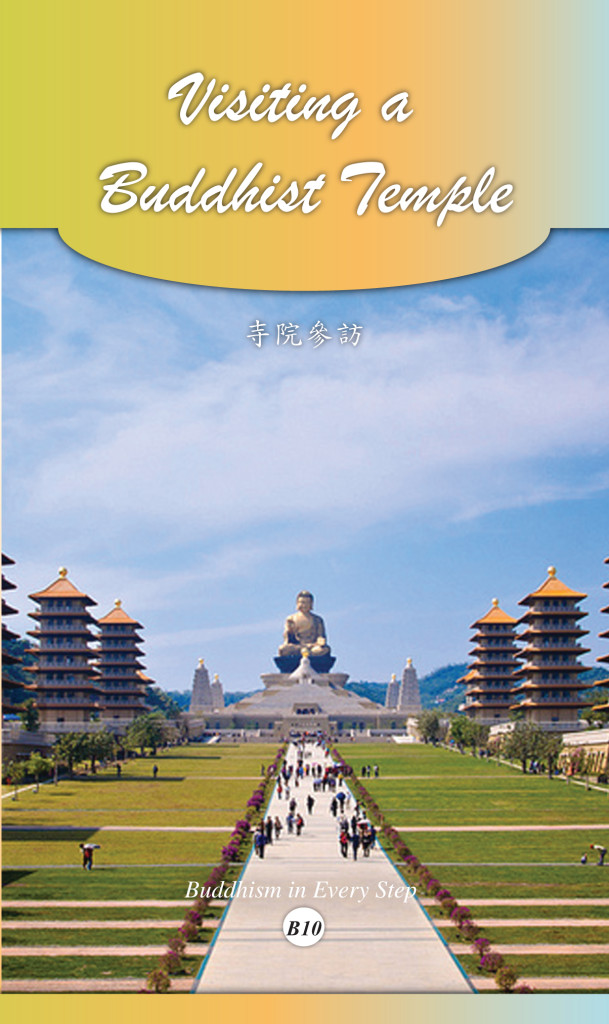
Visiting a Buddhist Temple
Understanding Pure Land through the Amitabha Sutra
Humanistic Buddhism’s “Ten Remedies for the Mind”
Buddhism and Psychology
A Buddhist Approach to Management
Buddhism and Music
Looking Ahead: A Guide for Young Buddhists
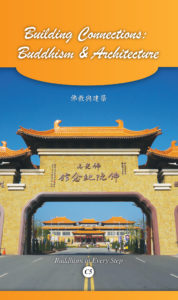
Building Connections: Buddhism & Architecture
Related Articles

As we live, we must strive for a life of value. Buddhism is different from philosophy, for it does not only deal with knowledge and theory. Rather, Buddhism calls for devout faith, developed morality, and most importantly: spiritual practice.All we need is the right intention to begin any form of spiritual practice, whether it is bowing to the Buddha, chanting sutras, repentance, meditation, or other Read more
Some people may think it is strange that in this scientifically enlightened century anyone would want to talk about ghosts. In the past, even sages avoided the subject of the supernatural if they could. Confucius never spoke about ghosts. At the mere mention of ghosts, frightful images instantly arise in our minds of their pale faces, their wild hair and their sharp fangs. The truth Read more
The occurrence of a disease is closely related to one’s mental health, physical health, spiritual health, behavior, habits, living environment, and even the society and culture in which one lives.  Harmonizing all of these elements and engaging in specific practices can help to bring about optimum health and prevent illness.  Gaining awareness about the cause of illness and conducting our lives in a manner that Read more
In Buddhism, the root cause of human suffering and other problems are identified as the mind. It thus proposes to tap into this invaluable resource by transforming any unwholesomeness into wholesomeness. Buddhism instructs sentient beings on how to recognize the mind, calm the mind, and handle the mind. The Buddha taught for forty-nine years during his lifetime. Whether his teachings were about the four noble Read more
The analysis of the mind in Buddhism is both multifaceted and sophisticated. As a spiritual practice, Buddhism contains numerous descriptions of the nature and function of the mind and instructions on how to search for, abide with, and refine it. In this regard, Buddhist psychology has much to offer, as does Western psychology.In the beginning, “psychology” referred almost exclusively to “a science that explains the Read more

© 2025 Fo Guang Shan International Translation Center

Protected by copyright under the terms of the International Copyright Union; all rights reserved. 

SutraTranscribing

As we live, we must strive for a life of value. Buddhism is different from philosophy, for it does not only deal with knowledge and theory. Rather, Buddhism calls for devout faith, developed morality, and most importantly: spiritual practice.

All we need is the right intention to begin any form of spiritual practice, whether it is bowing to the Buddha, chanting sutras, repentance, meditation, or other such practices. Any of these can form the basis of a daily practice.

You can start your Buddhist practice right at home.

Many Buddhists dedicate a room or a small space in their home specifically for their Buddhist practice. This place becomes the focus of one’s meditation and recitation. 

Such a place can also be the center of one’s devotional practices. It can be where one places a Buddha image, pays homage and bows to the Buddha, and makes offerings. 

A Buddha statue should be located in a place of respect. A Buddha statue can be placed in the living room of a house at an elevated place. It is also possible to place a Buddha statue in a bedroom by placing it in a cabinet—opening the doors when one is engaging in spiritual practice and keeping them closed when one is not. It is also possible to mount an image of the Buddha in a picture frame, bring it out while in use, and keep it in a high place or out of sight otherwise.

Bowing before a Buddha statue is a common sign of devotion, humility and respect. Buddhists will often make three bows to the Triple Gem: one to the Buddha, the teacher; one to the Dharma, the teaching; and one to the Sangha, the monastic community. Another common practice is to make offerings before a Buddha statue. Offerings need not be elaborate, some incense, flowers, water, or fruit is just fine.

It is important to be practical with regards to Buddhist practice.

For example, when doing daily recitations one should not do so too loudly out of respect for one’s neighbors. If someone knocks on the door or the phone rings during sutra chanting, simply mark one’s place with a piece of paper or a bookmark and resume again once the matter has been dealt with.

One’s practice should take shape around how much time one has in the day.

Some suggestions:

1-Minute Practice

  • Bow or join one’s palms before a Buddha statue at a home shrine or when passing a Buddhist temple.
  • Offer incense, flowers, or a cup of water before a Buddha statue.
  • Recite Amitabha Buddha’s name three times.
  • Chant the four-line verse from The Diamond Sutra.

2-Minute Practice

  • Chant The Heart Sutra during one’s household chores, like sweeping the floor, cooking dinner, or washing the car.
  • Chant the ten great vows of Samantabhadra Bodhisattva.
  • Bow to the Buddha three times.

5-Minute Practice

  • Before going to bed or right after waking up, sit calmly and observe the mind for five minutes.
  • Recite the name of Amitabha Buddha by exhaling, reciting ten times quickly, and only then breathing in.
  • Chant The Eight Realizations of a Bodhisattva Sutra.

10-Minute Practice

  • Chant The Universal Gate Sutra, The Amitabha Sutra, or The Great Compassion Mantra and Ten Short Mantras.

15-Minute Practice

  • Chant The Diamond Sutra.
  • Bow to the Buddha with twelve slow, mindful bows.
  • Sit in meditation and contemplate the mind.

30-Minute Practice

  • Sit in meditation and contemplate the mind.
  • Recite Amitabha Buddha’s name continuously.
  • Bow to the Buddha with twenty-four slow, mindful bows.
  • Chant a chapter from The Lotus Sutra or The Flower Adornment Sutra.

60-Minute Practice

  • Chant The Amitabha Sutra or Universal Gate Sutra, recite Amitabha Buddha’s name, circumambulate a Buddha statue, and transfer the merit.
  • Chant The Diamond Sutra three to five times.
  • Chant the Great Compassion Mantra 12, 24, 32, or up to 108 times.

***Related sutras and texts can be downloaded here.

The main purpose of spiritual practice is to develop one’s power of will. Just as porcelain plates and ceramic jars must be fired in a kiln or baked in the sun to become strong, we grow closer to recovering our true self through daily practices like offering incense, bowing to the Buddha, reading or chanting sutras, or meditation. By maintaining these practices regardless of how busy or idle we are, we will improve our temperament, purify our spirit, elevate our character, and enhance our vitality.

More Featured Articles

Love and affection are infinitely valuable. There are various levels of love and affection that we can aspire to. Some people describe how people love this way: Young people love with their words, middle-aged people love with their actions, and elder people love with their hearts.  Read more
It is only through loving-kindness and compassion that we can find room in our hearts to forgive others. It is only through our willingness to let go of resentment that we can find a way to magnanimity.  Read more
People often ask me, “What ad­versity have you experienced in your life?” And for a moment, I can­not come up with an answer. I have always maintained the attitude of taking things as they come, as in the sayings “When the soldiers come, de­ploy the generals to fight back; when there is a flood, use earth to stop it” and “When encountering a mountain, cut Read more
One of the biggest weaknesses in today’s society is that we have developed the habit of not saying we are sorry. Once we grow up and rise in status and knowledge, apologizing becomes harder and harder. But human beings are not perfect sages and we all make mistakes. Being able to correct our mistakes is a virtue in itself. This ability to amend our actions Read more
Offering lamps at Buddhist temples and stupas is a common practice. The Flower Adornment Sutra says, "The lamp of wisdom can break through all forms of darkness." As such, lamps represent the light of wisdom that pierces through the darkness of ignorance. This empowers sentient beings encumbered by confusion. The Buddhist practice of offering lamps originates from the actions of a poor girl named Nanda. Read more
The Buddhist precepts are here to protect us from wrongdoing, lead us away from what is bad, and towards what is good. Vinaya Master Daoxuan of the Tang dynasty composed the Simplified and Amended Handbook of the Four-Part Vinaya [Sifenlü Shanfan Buque Xingshi Chao], in which he analyzed the precepts in terms of their “rules,” “essence,” “practice,” and “characteristics.” When one puts the actual rules Read more
If your mind is in balance, what need is there to work at morality? If your behavior is correct, what use is meditation to you? If you understand mercy, then you will naturally care for your parents. If you understand faithful conduct, then all of society will be in order.—Platform Sutra of the Sixth PatriarchA Balanced MindMental balance results from understanding that self-respect is a Read more
We sometimes see signs on the highway warning: “Keep a safe distance.” Actually, it is not only in driving that we need to keep a distance. For safety reasons, any person and anything in the world needs to keep a distance.Take, for instance, the human body. Our eyes, nose, and mouth all need to keep a distance from one another. Our internal organs all have Read more
Chan is meditation throughout our lives. When we live with Chan, the taste of food and feel of clothes will change. We will not feel difficulty when dealing with our affairs. Any matter can be laughed away. The human world has its ups and down, but when we have a Chan mind it is like the world is ours and nothing is lacking. All human Read more
Sharing joy with others is not only a virtue, it is also a delightful experience.To take delight in shared joy is to give willing support to those who are compassionate in helping the needy; it is to give genuine praise to those who have dedicated themselves to the highest achievements in life. If we want to be successful in this world, we must cultivate the Read more
While the Four Noble Truths explain the phenomena of the universe, the Buddha expounded on them mainly as a guide for life. It is inadequate, however, to merely learn the Four Noble Truths. We must resolve, cultivate and practice accordingly. We must end the causes of suffering, practice the path, and reach the cessation of suffering in order to achieve liberation. Consequently, the Four Universal Read more
The occurrence of a disease is closely related to one’s mental health, physical health, spiritual health, behavior, habits, living environment, and even the society and culture in which one lives.  Harmonizing all of these elements and engaging in specific practices can help to bring about optimum health and prevent illness.  Gaining awareness about the cause of illness and conducting our lives in a manner that Read more

Love and affection are infinitely valuable. There are various levels of love and affection that we can aspire to. Some people describe how people love this way: Young people love with their words, middle-aged people love with their actions, and elder people love with their hearts. 

This means that as we age, our love matures. Spiritual development also deepens and expands our love.

Love starts at home. We love our spouse, our children, and our siblings. From here, we extend our love to our relatives and friends. Further, our love encompasses all human beings and then all beings. From a possessive kind of love, love matures into a giving kind of love, and finally into the enlightened love that bodhisattvas and Buddhas have for everyone. This kind of love is the great compassion that is described by the saying: “I will not seek pleasure just for myself. I long for all sentient beings to be free of suffering.”

Love is like water. On the one hand, it can nurture our lives; on the other hand, it can drown us. Thus, if we do not know how to love properly, love can bring us many problems and ruin our lives. If we are ordinary and selective about whom we love, instead of embracing all beings, the vast dimensions of love are hardly actualized. How do we love properly? Let me offer the following four guidelines:

  • Love wisely—We should use our wisdom to purify our love.
  • Love compassionately—We should use our compassion to manifest our love.
  • Love in accordance with the Dharma—We should use the Dharma to guide our love.
  • Love morally—We should use morals and ethics to direct our love.

Love is such an important subject of our lives. How do we love selflessly and offer our love to all? How do we transform a possessive love to a giving love, to a love for the Dharma? How do we purify our love from one of discrimination to one of great compassion? How do we love in the spirit of this common saying: “Cultivate our loving-kindness without conditions, and ground our compassion on oneness”? How do we manifest the true potential of affinity? These are very important questions for us to ponder! When we seek to go beyond ourselves and offer our love and affection in service to the community, then our lives and the lives of others will be more rewarding and more joyful!

From Living Affinity, written by Venerable Master Hsing Yun.

Image from Pixabay.

More Featured Articles

Anger is distinguished from greed in that anger is a form of revulsion created by something we do not like while greed is a form of attraction brought on by something we do like. In this limited sense, and in this sense only, greed can be said to be “better than” anger. Greed at least has some positive components while anger generally has none at Read more
Greed narrows our vision as it obscures the wealth of wisdom contained in our inherent Buddha nature. Read more
Trustworthy WordsIf you lie, you will not be trusted. If you cannot be trusted, you will be ineffective in your own life and useless to other people. Lies hurt others because they damage their trust and their sense of what is right and wrong. This is a very serious kind of damage; it wastes time, frightens people and causes them to doubt their basic intuitions Read more
Sages from all religions who serve the multitudes without any monetary reward or recognition are volunteers of human society.  An ancient sage once said: “Before one can become a prominent figure in Buddhist circles, one has to be a horse and an ox for all sentient beings.” Another said: “Before one attains Buddhahood, one first has to form affinity.” Over the generations, Buddhist monastics have Read more
In devoting my life to Buddhism, in order to keep Buddhism current with the advances in society, in terms of thoughts, I am always making improvements at every hour and moment; in terms of practice, I am constantly and continuously making adjustments. Even though I know that Buddhism must be reformed, innovation never comes into being in the heat of the moment. My “silent revolution” Read more
Birth and death are realities of life. Regardless of who we are, we cannot escape either one. While birth is celebrated, death is feared by most. In order to cope with our fear, we often seek comfort in religion. Although each of the world's major religious traditions has its own teaching concerning death, Buddhism is the only one that promotes the doctrine of impermanence as one Read more
Harmful attachments are often described in Buddhist literature as impediments or hindrances because they block our view of the truth and prevent us from seeing our own Buddha nature. Read more
Some people may think it is strange that in this scientifically enlightened century anyone would want to talk about ghosts. In the past, even sages avoided the subject of the supernatural if they could. Confucius never spoke about ghosts. At the mere mention of ghosts, frightful images instantly arise in our minds of their pale faces, their wild hair and their sharp fangs. The truth Read more
Greed is a basic disease of all sentient beings. In our realm, the desire realm (kamadhatu), the force and effects of greed can be felt especially strongly. Greed is based on ignorance and cannot function without it. The fundamental ignorance that enables greed to function is the belief in a self that exists separately and independently from other sentient beings. This belief leads to nothing Read more
Being patient is an art, and being persistent is a kind of hope. Influenced by today’s instant culture, modern people tend to expect instant results in anything they do. Practitioners want to have attainment in this life, scholars want to become instant laureates in their fields, and entrepreneurs want to gain a huge fortune overnight. As the saying goes, “A flower picked before its time Read more
One of the biggest weaknesses in today’s society is that we have developed the habit of not saying we are sorry. Once we grow up and rise in status and knowledge, apologizing becomes harder and harder. But human beings are not perfect sages and we all make mistakes. Being able to correct our mistakes is a virtue in itself. This ability to amend our actions Read more
We should always try to see the good in others, not the bad. On the samsaric level of this saha world alone, back-biting and faultfinding are known by most people to be totally counter-productive. Not only does faultfinding produce nothing but anger and mistrust, but the effects of negative speech also create an environment in which it becomes difficult to do anything positive. Read more

Anger is distinguished from greed in that anger is a form of revulsion created by something we do not like while greed is a form of attraction brought on by something we do like. In this limited sense, and in this sense only, greed can be said to be “better than” anger. Greed at least has some positive components while anger generally has none at all.

Anger is one of the greatest obstructions to the successful study of Buddhism. Anger is a form of passionate ignorance. It is hard enough to learn when we are simply ignorant, but how can we ever learn if we are passionate in our ignorance? Only a quiet and receptive mind can learn. A mind raging with fire only burns its own fuel. For this reason, the Buddha often counseled his followers to beware of anger. All of us must learn to control and overcome anger.

Anger is a form of energy. 

The most basic way to cure anger is to see it that way. Remove all labels from it and disentangle it from all stories or excuses about why it is there. Seen purely as energy, anger is more easily put in perspective and controlled. Another way to control anger is to consider times in the past when you were angry. What do they matter now? Did they really matter then? After enough time has passed, recalling anger is like recalling the heat of a fire. There is a memory but no feeling.

The Mahaprajnaparamita Sastra says:

Overcoming anger brings peace to the mind. Overcoming anger leads to a mind without regrets. Anger is the source of the poisons that destroy goodness. All the Buddhas praise one who has overcome anger. When anger has been overcome, there no longer will be any anxiety.

The Saddharma Smrty Upasthana Sutra says that one who overcomes anger is loved by all and is delightful to see. His mind is calm, his face is pure and he is trusted by everyone. Once anger has been overcome, the sutra says, it follows naturally that one will be successful in upholding the precepts and in controlling fear, passion, criticism, harsh speech, and a tendency to complain or be bitter about one’s life. Overcoming anger is the source of much goodness. The merits that accrue to anyone who has overcome this vice lead to good circumstances in this life and a good rebirth after this life is over.

The Mahayana Samparigraha Sastra mentions five ways to overcome anger:

  1. Contemplate that since beginningless time you have been connected with all sentient beings in the universe.

  2. Contemplate the transience of life. Who is there to be harmed and who is doing the harming?

  3. Contemplate that only the Dharma is real and that there is no such thing as sentient beings. In this light, how can there be any such thing as harm?

  4. Contemplate that all sentient beings must suffer. In this light, why would anyone want to increase the suffering of another?

  5. Contemplate that all sentient beings are your children. Why would you want to harm any of them?

When all is said and done, compassion is the single best method for overcoming anger. The bodhisattva must learn to “be compassionate for no reason and to see all beings as being of one body.” 

If anger rises and you desire to harm another being, already you have harmed yourself far more than him. And that is why you must often think on compassion; for compassion keeps from rising all thought of anger, evil and pain.

Meditation on the Three Contemplations Sutra

From Being Good, written by Venerable Master Hsing Yun.

Image from Pixabay.

More Featured Articles

All my life, many have thought of me as rich, but the truth is, staying poor has always been my motto. I grew up in a poverty-stricken family, yet I never saw myself as poor, because I always felt rich in heart. Till my old age, many have thought of me as very wealthy because they believe I own many education institutes, cultural enterprises, publishing Read more
We should always try to see the good in others, not the bad. On the samsaric level of this saha world alone, back-biting and faultfinding are known by most people to be totally counter-productive. Not only does faultfinding produce nothing but anger and mistrust, but the effects of negative speech also create an environment in which it becomes difficult to do anything positive. Read more
Chan is meditation throughout our lives. When we live with Chan, the taste of food and feel of clothes will change. We will not feel difficulty when dealing with our affairs. Any matter can be laughed away. The human world has its ups and down, but when we have a Chan mind it is like the world is ours and nothing is lacking. All human Read more
The Avatamsaka Sutra says, 'The mind controls everything.' In order to properly control body and speech, we must come to understand our minds. If we can control our minds, we can do anything.Master Xingkong (780-862) wrote a wonderful passage that expresses this point very well. He said, "The practice of Buddhism can be compared to presiding over a walled city; during the day, thieves and Read more
Humans are thinking animals! Since the beginning of time, there have always been people who fantasize, who have delusions, who dream—and many who have ideals. When we lie in our beds at night, we should be free from worry. Yet thoughts about our lives often arise then; thoughts about family, country, or even the world. Everything is within our minds.The average person often tends to Read more
Many of us think that after undertaking the precepts life will become a matter of you-can’t-do-this and you-can’t-do-that. We wonder if that isn’t limiting us even more. We worry that it will mean a loss of freedom. This is why some people will question: Why should I receive the precepts and end up just limiting myself!In fact, if we were to go to a prison Read more
Trustworthy WordsIf you lie, you will not be trusted. If you cannot be trusted, you will be ineffective in your own life and useless to other people. Lies hurt others because they damage their trust and their sense of what is right and wrong. This is a very serious kind of damage; it wastes time, frightens people and causes them to doubt their basic intuitions Read more
The Buddhist precepts are here to protect us from wrongdoing, lead us away from what is bad, and towards what is good. Vinaya Master Daoxuan of the Tang dynasty composed the Simplified and Amended Handbook of the Four-Part Vinaya [Sifenlü Shanfan Buque Xingshi Chao], in which he analyzed the precepts in terms of their “rules,” “essence,” “practice,” and “characteristics.” When one puts the actual rules Read more
Most of us have an idea of what constitutes the space outside us; it is the environment in which we live. This includes the house we live in, the city we live in, or even the world we live in. Just as we need to skillfully manage our relationship to others, to the environment, and to wealth, we also need to properly manage our relationship Read more
Sharing joy with others is not only a virtue, it is also a delightful experience.To take delight in shared joy is to give willing support to those who are compassionate in helping the needy; it is to give genuine praise to those who have dedicated themselves to the highest achievements in life. If we want to be successful in this world, we must cultivate the Read more
If someone is too tough or stubborn, one can say that they have a cold heart, or even a heart made of stone. But consider this: our teeth may be hard and rigid, but they will each fall out as we get older. On the other hand, the tongue more or less retains its form even after we die. In general, things can sustain themselves Read more
The occurrence of a disease is closely related to one’s mental health, physical health, spiritual health, behavior, habits, living environment, and even the society and culture in which one lives.  Harmonizing all of these elements and engaging in specific practices can help to bring about optimum health and prevent illness.  Gaining awareness about the cause of illness and conducting our lives in a manner that Read more

An Honest Revelation—An Open Letter
by Venerable Master Hsing Yun, 19272023

Dear Dharma protectors, friends, and disciples, I am taking this opportunity to make an honest revelation to you all.

All my life, many have thought of me as rich, but the truth is, staying poor has always been my motto. I grew up in a poverty-stricken family, yet I never saw myself as poor, because I always felt rich in heart. Till my old age, many have thought of me as very wealthy because they believe I own many education institutes, cultural enterprises, publishing houses, and foundations; however, I never felt that I owned anything because these belong to the public, not to me. Although I have constructed many temples around the world, none of these houses, buildings, or even any of the furniture were intended for me. I own not a single piece of the tiles above my head or a single mound of the dirt beneath my feet. Every object within the Buddhist community belongs to the world, so how can there be such a thing as individual possessions? Nonetheless, in my mind, I can still feel that the entire world is mine.
 
All my life, I have owned neither a desk nor a cupboard. Even though my disciples have considerately prepared them for me, I still never used them. All my life, I seldom went out to the streets to shop, nor have I ever kept any savings. Everything that I have belongs to the public, the Fo Guang Shan Order, and the monastery. Likewise, all my disciples should follow the same example in dedicating one’s body and mind to the monastery, and live by following conditions.
 
All my life, many have thought of me as someone with an innate ability to gather an assembly. The truth is, I have a very lonely heart, devoid of a personal preference or animosity towards anyone. Others may view me as having a vast following of disciples and admirers, but I have never regarded them as mine, for my only wish is for them to find a place of belonging in Buddhism.
I have no personal possessions such as money, land, or memorabilia to divide between you. If you wish for something, just take one of my many books for remembrance; and if you want nothing, then even my words of advice will be of little use. All I have to offer is Humanistic Buddhism for you to learn from, and the temples for you to support.
I am impartial and show no preference to any individual. The Order has established a system and standards for determining rank, but maintaining fairness is a challenging task. Promotions are based on one’s performance in their assigned role, as well as their spiritual growth, study, and accomplishments, which differ from person to person. Success, ranking, and recognition are all connected to one’s personal merit; therefore, I cannot personally have a say in whether someone should get promoted or not. For this, I am truly sorry to my disciples, as I am unable to make everyone happy by speaking out on their behalf in the pursuit of fairness. But I hope this serves as a lesson in the reality of disappointment and adversity. The authority to approve promotions or demotions lies with the Board of Directors, while the true measure of spiritual cultivation as a monastic will always be weighed through the essence of Dharma. No worldly rules can accurately reflect this.
 
What concerns me about the future are the job transfers for my disciples. Although Fo Guang Shan is not a government, it nevertheless consists of numerous departments and a job transfer system. The Sangha Affairs Committee shall strive to assign appropriate personnel to each position. Any discrepancies between assigned positions and individual preferences or aspirations must be reconciled. Equality is a complex and challenging concept to define and measure in this world, but our ability to lead a peaceful and contented life depends on our unique interpretations of it.
All my life, many have thought of me as making painstaking efforts in establishing all these undertakings. The truth is, it has been very simple and easy for me, because in collective effort, I am merely a part of the team. I give my best in achieving the goals, and leave the rest to conditions. Many have thought of me as an expert in management; the truth is, the only thing I know is to take no action in governing. I thank everyone for showing mutual assistance and cooperation, because aside from the precepts and regulations, we do not have the right to discipline others. With everything that happens in this world, there is no need to take joy in seeing them come, or feel regret in seeing them go. Somehow, we all deserve to be free and at perfect ease when going along with the conditions. The ability to be in accord with the Way and to be compatible with the Dharma makes us the wealthiest in the world.
 
All my life, I have abided by the philosophy of giving. I have always given others my compliments and fulfilled their wishes. Being well aware of its importance, I always bear in mind the importance of developing affinities and spreading the seeds of Dharma everywhere I go.
For this very reason, I have established the working mottos for Buddha’s Light members:
“give others faith, give others joy, give others hope, and give others convenience.”
My desire to establish educational institutions stems from my own lack of formal education, and the realization that education is the key to self-improvement and transformation of character. I have also dedicated myself to writing, as the teachings of Dharma that I inherited from the Buddha must continue to flow from my heart to the rest of the world.
 
All my life, I have abided by the following principles: “to retreat in order to advance; to regard the multitude as myself; to own nothing in order to have something; to take joy in the truth of emptiness.” My monastic disciples should cultivate a mindset of transcendence and engage in worldly pursuits with a detached perspective. Furthermore, they must live a life of simplicity and refrain from accumulating material possessions. The monastic traditions from the Buddha’s era, such as owning only three robes and one bowl, having a total of no more than two and a half catties in personal possessions, and adhering to the eighteen ascetic practices, are exemplary traditions that align with the vinayas and should be deeply considered and remembered. Disciples of Fo Guang Shan must never raise funds, keep savings, construct temples, or establish connections with devotees for private purposes. If these rules are upheld, the glory of the Fo Guang Shan lineage will endure forever. Everyone must abide by the following: “glory goes to the Buddha, success goes to the community, benefit goes to the monastery, and merit goes to the devotees.”
One must know that “the Buddha’s Way fills the vast emptiness; the Truth is omnipresent within the Dharma realm.” Everything in this Dharma realm belongs to me, yet the phenomena of impermanence also tells me that nothing is mine.
There is no need to become overly attached to worldly matters. A practitioner of Humanistic Buddhism must remain connected to the world, but like a scarecrow watching over flowers and birds, we must not be overly deliberate or discriminative.
 
All of my disciples should own nothing but the Dharma. Anything such as money or material goods should be given away whenever possible, because these are assets which belong to the world. All monetary possessions should become public property, because everything we have is provided by the monastery. By doing so, we will avoid conflicts and disputes over material possessions. By fostering a virtuous mindset, we need not worry about our basic needs. I urge my disciples not to dwell on the trivial concerns of daily life, but instead to allow the monastery to use its resources for noble causes. The path to peace and prosperity for Fo Guang Shan lies in renouncing material wealth and focusing on the Dharma.
 
Asides from daily provisions for the monastery, any surplus money should be dedicated to cultural, educational, or charitable endeavors. Fo Guang Shan receives from all, and thus, shall give back to all. We must provide emergency relief, care for the helpless who have no kith and kin, and give to the poor and needy whenever the circumstances require. Disaster and poverty are all misfortunes of the world; it is a matter of course for us to extend a helping hand.
The lands of Fo Guang Shan, the Buddha Museum, and all branch temples are neither owned by the state nor leased. All of them were purchased with donations made by our devotees. With the only exception being the National Broadcast Network of Taichung, all these properties belong collectively to the monastic and lay assemblies of Fo Guang Shan. None of these properties have a joint partnership or are associated with any other organization. Since the founding of Fo Guang Shan, no money has ever been borrowed.
 
Branch temples must be well-assisted and renovated to provide better environments for devotees. Shall any of the branches become difficult to maintain, they will be closed down with the consent of the local devotees to concentrate on funding for cultural, educational, and charitable endeavors. None should be distributed for personal use. Monetary exchanges, except for donations, should not ever be made with other Buddhist organizations or individuals. Reimbursements or loans should never be involved to avoid disputes in the future.
I have devoted my entire life to the Buddha, regarding him as my teacher, and taken Buddhism as my path. Therefore, in our future practices, we should revere the Buddha and his ten foremost disciples as role models, and the Buddhist patriarchs as exemplars.
In propagating Buddhism, branch temples across the world should strive to localize by assigning local nationals abbacy postings. All my teachings on Humanistic Buddhism should be conveyed in a way that reaches out to families and is accepted by people.
 
All my life, I have aspired to propagate Humanistic Buddhism. Anything that is taught by the Buddha himself, is needed by human beings, is pure, and is virtuous and beautiful; any teaching that promotes the happiness of humanity is regarded as Humanistic Buddhism. In addition, we should regard suffering as the conditions which strengthen us. While impermanence means nothing is fixed, it can also change our futures to make our lives even better. Emptiness does not mean “nothingness,” but builds upon the idea of existence. Only when there is emptiness, can there be existence. In my life, I have owned nothing; is this not wondrous existence arising from true emptiness? I firmly believe that the teachings of Humanistic Buddhism will be a guiding ray of light for humanity in the future. Speaking good words is truthful, doing good deeds is virtuous, and thinking good thoughts is beautiful. We must let truth, virtue, and beauty take root in our society through practicing the Three Acts of Goodness. Wisdom is prajna, benevolence is compassion, and courage is bodhi wisdom. We must strive to achieve them, so that we can develop a mind of morality, concentration, and wisdom, with practicing the bodhisattva path as our spiritual cultivation.
Humanistic Buddhism originates from the Buddha and has now become widespread. However, the insistence on different views since ancient times has resulted in the division into the Sthaviravada and Mahasamghika schools in India, and into the eight schools of Chinese Buddhism afterward. The differences in practice and ideology are understandable, but comparing and competing over who is right and wrong goes against the spirit of Buddhism. For this reason, the development of Fo Guang Shan and Buddha’s Light International Association (BLIA) will surely define them as trustworthy organizations in the Buddhist community.
 
If any of you are interested in maintaining the solidarity of Fo Guang Shan’s monastic and lay assemblies, you can follow in the footsteps of ancient sages in establishing a sect. Nonetheless, the introduction of a new sect depends on the efforts and accomplishments of later generations. Should anyone be able to contribute to Buddhism and command public respect and support, it would be beneficial for a contemporary Buddhist school to stand out and become the pivot of Buddhism.
 
For those who do not see eye to eye with the approaches of Humanistic Buddhism, it is just as the saying goes, “Even after one has already eradicated attachment to the self; it is still difficult to correct one’s attachment to the Dharma.” Should anyone opt to establish their own school, we will have to be open-minded and accept them as a branch of the Fo Guang Dharma lineage. As long as it does not deviate from the core teachings or the lineage, we must strive for tolerance.
Our objectives are not focused on our own accomplishments, but on the transmission of Buddhism regardless of gender or age. On the great path of the Buddha’s Light, the four assemblies of monastics and laity already have established roles. The monastics, the bhiksus and bhiksunis of Fo Guang Shan, shall shoulder the responsibilities of propagating Buddhism while the laymen and laywomen of the BLIA shall share their talents and make full use of their abilities. By combining our strengths, a common understanding and solidarity will unite everyone in keeping the BLIA on the rise, so that the Buddha’s light will shine universally and the stream of Dharma will flow for eternity. Members of the BLIA should be encouraged to keep a livelihood that is in accord with the Noble Eightfold Path. Let us help one another so that we can progress and develop together.
 
Although the BLIA is affiliated under the Fo Guang Shan Order, both monastics and laity can live in harmony without disputes or conflicts, just as emptiness and existence are two sides of the same coin. Fo Guang Shan already has a democratic system in effect, therefore the leaders of Fo Guang Shan and BLIA should comply unanimously with the standards established and consider public opinion.
As an advocate of equality, I firmly believe that both men and women, both the rich and the poor, are all equal without discrimination. All living beings have the Buddha nature, whether sentient or insentient, all living beings can also attain nirvana. Therefore, I hope to thoroughly put into practice the spirit of “equality amongst all living beings,” through the beliefs in “respect for human rights” and “promoting the right to life.”
We must cherish every tree and flower at Fo Guang Shan, care for our neighbors, encourage the youths at the children’s home, express our concern to the elders at the senior’s home, and respect the elders of the sangha community.
I hope to leave good causes and conditions for humanity, the sentiments of Dharma for followers, the seeds of faith for myself, and unsurpassed glory for the Buddhist congregation. May the entire world believe in the Law of Causes, Conditions, and Effects. I hope that everyone can practice kindness, compassion, joy, and equanimity, as well as leave their goodwill to the world.
 
The undertakings to propagate Humanistic Buddhism (such as establishing universities, television stations, newspapers, publishing houses, Cloud and Water Mobile Libraries, senior homes, children’s homes, and services that benefit society) must be offered uninterrupted support. The Water Drop Teahouses should promote and place an even greater emphasis on the idea of “gratitude for a drop of water.” If we have the opportunity, we should also pay a visit to the Ancestral Temple of Fo Guang Shan—Dajue Temple in Yixing, China. I have always honored works relating to cultural, educational, and charitable endeavors; therefore I have established the Venerable Master Hsing Yun Public Education Trust Fund, which has raised more than one billion dollars to date. In addition to contributions by a handful of devotees, most of its funding comes from my One-Stroke Calligraphy and the royalties from my books. In the future, endeavors can be supported by the elders of Fo Guang Shan as well as Buddhists in entrusting their inheritances to the trust fund, to allow further expansion in benefiting society and leading a good example for the country.
 
Awards—such as the Truthful, Virtuous, and Beautiful Media Awards, the Three Acts of Goodness Schools, the Global Chinese Literature Awards, and the Hsing Yun Education Award—can be established as long as there is sufficient funding. Fostering progress in society is the unshakable responsibility of every Buddhist.
In terms of education, the monastery’s largest expenditure is towards the management of several universities and high schools. As long as the right conditions are present, management of the schools can be unconditionally handed over to those with affinities, so long as they are not sold or bought. If the schools are sold, how will we explain ourselves to those who have contributed to the fundraisings? This will not be beneficial for Fo Guang Shan’s reputation and will be criticized by others. Any group that contributes to Fo Guang Shan’s cultural and educational undertakings should be reimbursed, so that those with aspirations can be even more closely united. Constructive comments, or even criticism should not be refused; we need to bear the magnanimity of “taking joy in having one’s errors pointed out.” We must accept everyone’s opinions, so that they will be even more supportive.
 
Very often, I would see the monastic disciples from the Landscaping Unit weeding and trimming flowers. I would also see fellow practitioners in the Environmental Care Unit sorting out recycling, the Construction Unit doing repair and maintenance work, the Domestic and Overseas Executive Council offering their services, as well as the kitchen staff, the shrine attendants, and the heads of the shrines. Their efforts and willingness to undertake responsibility are the true forces behind Fo Guang Shan’s success; it is their dedication and sense of responsibility that inspires me and fills me with gratitude. Without everyone’s resolve, how could there be Fo Guang Shan as it is today? From today onwards, training should be given on receiving guests, caring for devotees, and the participation of volunteers, so that our religious organization can reach even greater heights.
Therefore, it is my lifetime aspiration for the spirit of teamwork to prevail and persevere without complaints and regrets. For no one can exist solely by themselves, everyone must help and respect one another, coexist and thrive together. Only then can one grasp the fundamental essence of the Buddha’s teachings. It is preferable to forgo one’s personal gain, showing forbearance, rather than harming the monastery and society.
One of the predecessors from my hometown, Master Jianzhen of the Tang dynasty, had to go through numerous obstacles to reach Japan to propagate culture. At the old age of seventy-five, aware that there weren’t any prospects of returning to his village, he wrote the following verse: “Across the mountains, streams, and foreign lands; all places under the same sun, moon, and sky; Hope lies in all Buddhist practitioners, to create future affinities together.” The current of life is like a river with no return, but there will still eventually be a day of coming back, as the end of one lifetime also marks the beginning of another. No man is an island; to live, we need the services provided by different people such as scholars, farmers, artisans, and merchants, as well as the assisting conditions of earth, water, fire, and wind. Everything in nature, such as the sun, moon, and stars, as well as the mountain, river, and earth, are all part of our lives. Therefore, we should cherish the Earth that we call home, and help all beings on this planet to repay the kindness, benefits, and assistance they have shown us. 
 
Each one of us came into this world empty-handed, and will leave empty-handed. Reflecting on a lifetime, I cannot tell you what I have brought into this world, but I shall take with me the joy and good affinities of this world. I will never forget the many devotees who have happily given and supported me, as well as the blessings of many fellow practitioners. Nor will I ever forget all the conditions that have assisted me, as they are etched into my heart. All the blessings of the Buddha and the friendships I have formed in this lifetime are truly magnificent; I feel my life in this world has been lived with great value. I vow to devote lifetime after lifetime to the Buddha and to serve all beings, thereby repaying the four types of gratitude.
Now, as I am about to leave with the respect you have given me, with the affinities you have given me, with the care you have given me, and with the friendship you have given me, I vow to repay your generosity in kind. I hope all of you can remember and put into practice what I have said in speeches given throughout my life, such as “Work by collective effort, lead by a system. Do but what is in accord with Buddha, and rely on nothing but the Dharma.” Also, remember the verse spoken during Dharma transmissions: “The bodhi seeds of the Buddha’s light are sown across the five continents; when the flowers bloom and bear fruit, the whole universe will be illuminated.” Those who believe me when I say, “Where there is Dharma, there is a way,” should practice compassion, kindness, joy, equanimity, creating affinities, and repaying gratitude. Furthermore, be harmonious, upright, of service, normal, honest, patient, fair, just, willing, and practice the way of the Buddha. With these principles of the Dharma, a path will naturally present itself.
 
All my life, although I have encountered many ordeals of time, I still feel very fortunate. I have enjoyed hardship, poverty, struggle, and having nothing. I have understood that all Four Elements are existence; I have felt flowers blooming in all four seasons. The Buddha and devotees have given me too much. Although renounced and destined to sacrifice personal enjoyment, I have actually enjoyed the wondrous happiness that comes from sacrifice. I feel that the happiness from Chan and the joy from the Dharma found in the Buddha’s teachings are already too much to enjoy.
In regards to the conclusion of this life, there will be no relics, and all unnecessary and over-elaborate formalities are to be completely omitted. A few simple words written or Buddhist songs chosen from the “Sounds of the Human World” may be sung by those who miss me. The most fitting way to honor my memory and my sincere wish is for everyone to bear the teachings of Humanistic Buddhism in mind and always practice Humanistic Buddhism.
 
The last thing that I am concerned about, other than the happiness and peace of devotees, is everyone in the monastery—in particular, the teachers and students of the Buddhist College. Since they are the future bodhi seeds of Fo Guang Shan, they must be grounded and dedicated, so that Humanistic Buddhism may last as long as heaven and earth, and can remain a part of us always.
The banner of Dharma cannot be toppled. The lamp of wisdom must never be extinguished. I hope everyone is able to continue to progress on the great path of Humanistic Buddhism, to support and uplift each other, and to nurture our own well-being for the sake of Buddhism.

Last but not least, these are my final words:

With a heart filled with compassion and vows to save others,
My body is like the ocean of the dharma, unbound;
Should you ask what have I achieved in this lifetime?
Peace and happiness now shine over the five continents.

Hsing Yun
Residence of the Founding Master,
Fo Guang Shan
October 4th, 2014
 

Related Articles

No post found